You’ve played this character for months, maybe years. You know exactly what they look like. You can see them in your head when you close your eyes. But now you’re staring at a blank commission form, and suddenly you have no idea how to put any of it into words.
If that’s you, welcome. You’re in the right place. This is one of the most common things we hear from first-time commissioners, and the good news is: it’s a lot easier than you think once you know what to include.
Here’s our honest-to-god checklist, the one we wish everyone knew before hitting “send” on their first commission.
1. Race & Class (the foundation)
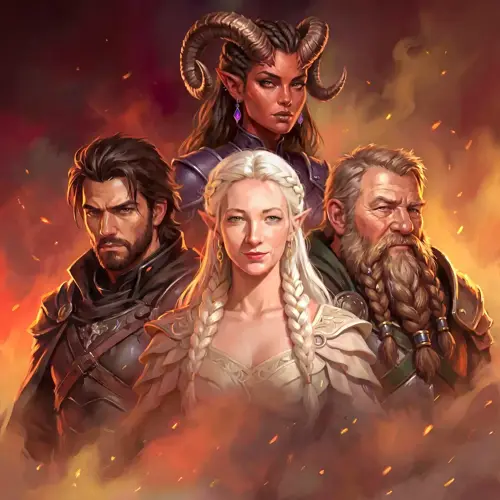
Start with the basics. A tiefling warlock and a half-orc fighter are going to look like completely different people, and that’s before we even talk about hair color or outfits. Race and class are the foundation on which we build everything else.
Bonus points if you mention the subclass or archetype: “Bladesinger wizard” gives us a very different mental image than “necromancer wizard,” even though both are technically wizards.
2. Appearance (the physical stuff)
Now the fun part. What does your character actually look like? Think:
- Hair: color, length, texture, style (braided, messy, shaved on one side, etc.)
- Eyes: color, shape, any magical glow or unusual features
- Skin: tone, any markings, scars, tattoos, piercings, freckles
- Face: sharp jaw or soft features? Young or weathered? Any scars or asymmetries?
- Build: tall and lean? Short and stocky? Muscled? Wiry?
Don’t overthink this. Just describe what you see when you imagine them. Five sentences are usually enough.
3. Outfit & Armor (the part everyone forgets to mention in detail)
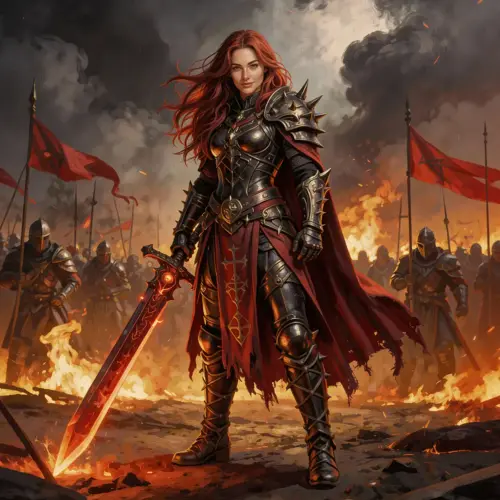
This is where a lot of people gloss over things and later wish they hadn’t. “She wears armor” is not a description. “She wears scuffed leather armor with a fur-lined hood and too many belts”. Now we can see her.
Think about:
- Material (leather, chainmail, plate, robes, cloth?)
- Condition (pristine? battle-worn? patched up?)
- Colors and any decorative details
- Accessories like belts, pouches, cloaks, jewelry
- What they’d wear on a NORMAL adventuring day, not their best dress, not their worst, just their everyday gear
4. Weapons & Signature Items
Every good character has at least one thing they’re never caught without: maybe it’s a sword their mentor gave them, a spellbook covered in their own annotations, a lute with a chipped neck, or a pendant that belonged to someone they lost.
Tell us about it. These are the details that make a portrait feel like a real person instead of a character sheet with a face.
5. Personality & Mood
This is the one most people skip, and one that changes everything.
Your character’s personality isn’t just backstory. It shows in their faces, posture, how they hold their weapons, and the look in their eyes.
Try to answer these questions
- Confident or cautious?
- Playful or brooding?
- Calm or always ready to fight?
- Warm or guarded?
Even one single sentence helps: “She’s calm on the outside, but her hand is always near her blade” tells us more than three paragraphs of backstory.
6. Background & Setting (where are they?)
Where is your character when we meet them in the portrait? This is the atmosphere of the piece.
- A sunlit forest clearing?
- A smoky tavern?
- The ruins of a battlefield?
- A snowy mountain pass at dusk?
- A library full of candlelight?
If you have no idea, that’s fine, say so and trust us to pick something that fits. Sometimes, “you choose something that matches the vibe” is the best direction you can give us.
7. Reference Images (the secret weapon)
Reference images are the single most helpful thing you can send. References don’t have to be exact. In fact, they shouldn’t be, we’re not trying to copy someone else’s work, so sending these could help.
- Screenshots from games like Baldur’s Gate 3, where you built something close.
- Pinterest boards of outfits, armor, or general vibes.
- Photos of yourself (if it’s a personalized portrait).
- Other artwork you like, not to copy, but to show us the general style or mood.
- Even random images of textures, colors, or poses.
One good reference is worth a thousand words. Two good references are worth a thousand revisions you won’t need.
What you DON’T need to worry about
Before you close the tab in a panic because you don’t have all this ready, relax. You don’t need a three-page backstory. You don’t need to have every detail figured out. You don’t need to be a writer.
What you need is to give us enough to work with, and to trust us to fill in the rest with our own craft. A few clear sentences and one or two reference images are usually enough to get started. The best commissions come from a collaboration, not a specification document.
And if you genuinely can’t decide on something? Just say, “I’m not sure, surprise me.” We’ll take that as an invitation, not a problem.
“I don’t even know what I want. Can I just send you a photo?”
Yes. Absolutely yes. This is one of our favorite kinds of commissions.
Some people come in with a ten-page character sheet and a Pinterest board twelve miles long. Others come in with literally one photo of themselves and a feeling. Both are valid, both work.
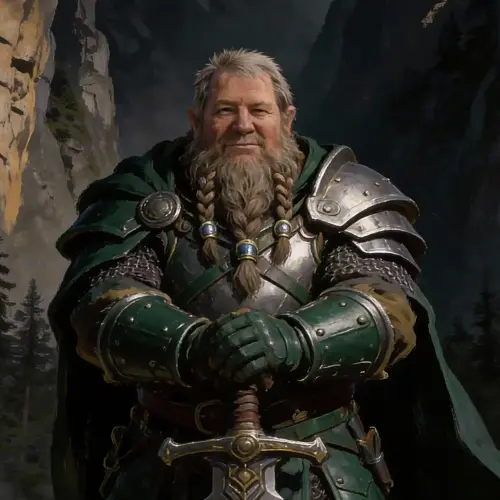
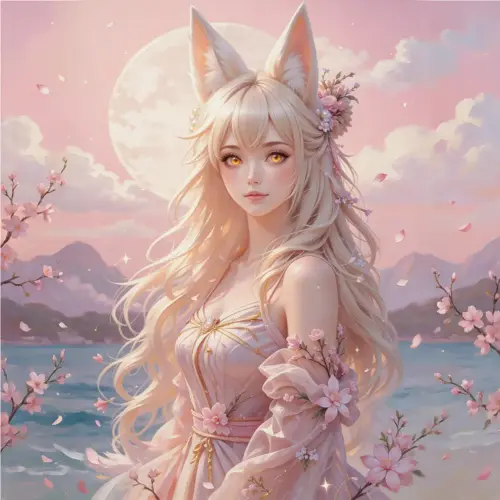
If you don’t have a character in your head but you want to see yourself (or someone you love) reimagined as a fantasy version: an elf, a sorcerer, a warrior, a forest spirit, whatever, send the photo and tell us the vibe you’re going for. Or don’t even do that. Just send the photo and say, “You decide.”
We’re imaginative people. That’s what we do. Give us a face and a mood, and we’ll build a whole world around it. Maybe the quiet way you’re smiling in the photo tells us you’re a healer. Maybe the look in your eyes says ranger. Maybe your whole energy is “retired dragon who opened a tea shop.” We’ll figure it out together.
No stress. No pressure to come up with a character concept first. Sometimes the best portraits start with “I have no idea, surprise me”, and those are often the ones people love the most, because they show them a version of themselves they didn’t know they wanted to see.
Still feeling stuck?
Here’s a trick that works every time: picture your character walking into a tavern. What do people notice first? Their height? The sword on their back? The scar across their eye? The weird, quiet confidence they carry?
Write that down. That’s your starting point.
The rest is just details.