Commissioning art for the first time is exciting. It’s also a little scary, you’re trusting people you’ve never met with a vision that lives entirely in your head, and hoping they’ll bring it to life the way you imagined.
The good news: most of the things that go wrong in commissions are completely avoidable. They’re not big, dramatic disasters. They’re small, easy-to-fix mistakes that make the whole experience smoother for everyone, and they almost always come down to communication.
Here are the five we see most often, along with how to handle them so your commission turns out exactly the way you want.
Mistake 1: Sending a description that’s too vague
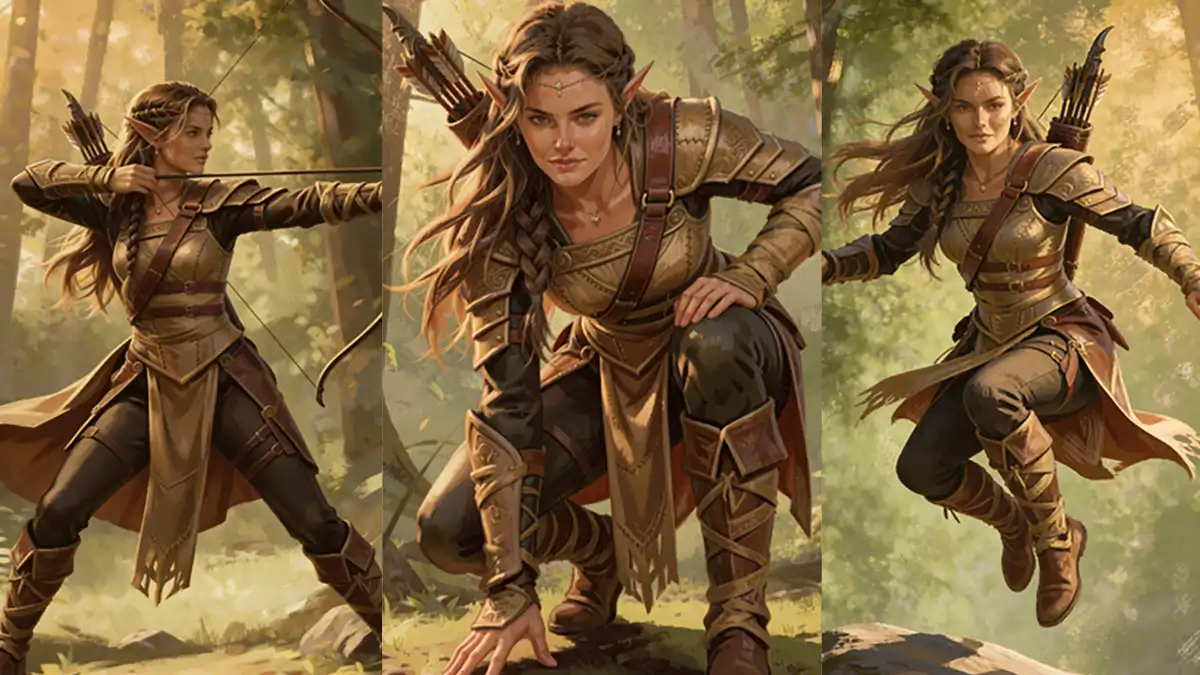
This is the big one. “I want a cool elf ranger” is not enough information for us to give you the portrait you’re picturing. There are a hundred ways to paint a cool elf ranger, and only one of them is the version you have in your head.
The fix is simple: take five extra minutes and describe what you actually see. What color is her hair? What does her armor look like? Is she serious or playful? Where is she standing? Even a few extra sentences make a huge difference.
You don’t need to write a novel. You just need to give us enough to work with so we can paint your character, not a generic version of one.
(If you’re stuck on this part, we have a whole post on how to describe your character that walks you through it step by step.)
Mistake 2: Not sending any reference images
Words are great. Pictures are better. Pictures plus words are unbeatable.
A reference image is the single fastest way to communicate what you want. It doesn’t have to be a perfect match. In fact, it shouldn’t be. It can be a Pinterest pin of an outfit you like, a screenshot from a game where you built something close, a photo of yourself, or even a piece of art with a vibe you’re drawn to.
The point isn’t to copy. The point is to give us a visual anchor so we both start the conversation looking at the same thing, rather than trying to describe colors and shapes with text alone. Two or three good references can save you a round of revisions you’d otherwise need.
Mistake 3: Waiting until the last minute (when there’s a deadline)
This one breaks our hearts every time. Someone messages us with a beautiful idea for a birthday gift, or an anniversary, or a baby shower, and the event is in three days.
Custom art takes time. Not just the painting itself, but the back-and-forth that makes it feel like your piece. The questionnaire, the sketch, the revisions, and the polishing. All of it takes days, sometimes weeks, depending on our queue and the level of detail.
If you’re commissioning art for a specific occasion, give yourself room to breathe, and reach out at least a few weeks in advance. The earlier, the better. We’ll always do our best to meet a deadline if we can, but the more notice you give us, the more time we get to make something you’ll actually love, instead of something that just barely got finished in time.
Mistake 4: Trying to control every single detail (instead of trusting the artist)
This one is tricky because it comes from a good place. You’ve been thinking about this character for months, and you know exactly how their cloak should fall. You have very specific feelings about the angle of their sword. You want it to be right.
Here’s the thing: we’re not a copy machine. We’re collaborators. Part of what you’re paying for is our eye, our sense of composition, our instinct for what looks good, our ability to translate your idea into something that actually works as an image.
The best commissions happen when the client gives us clear direction on what matters most to them and then trusts us to handle the rest. If every small detail is locked down before painting even starts, there’s no room for the kind of magic that turns a portrait from “exactly what I asked for” into “even better than I imagined.”
Tell us what you love. Tell us what’s important. And then let us do what we do.
Mistake 5: Being too polite to say what you actually think
This one happens more than you’d think. The sketch comes back, something feels off, and instead of saying so, the client says, “Looks great!” because they don’t want to seem difficult.
Please don’t do this.
Revisions exist for a reason. The whole point of the sketch stage is to catch things before they’re locked into the final piece. If something isn’t quite right, the eyes look off, the pose feels stiff, the color of the cloak isn’t what you imagined, say so. We’d much rather hear it now than have you receive the final piece and feel disappointed.
You’re not being difficult. You’re being a good client. We want your honest feedback. It’s how we make sure you walk away with something you actually love.
The thread that ties them all together
Notice something? Every single one of these mistakes comes back to the same root: communication. Not enough of it, the wrong kind of it, or holding back when you should speak up.
The single best thing you can do as a client is talk to us like people. Please tell us what you want. Send us references. Give us time. Trust us to do our jobs. And speak up when something doesn’t feel right.
That’s it. That’s the whole secret to a great commission.