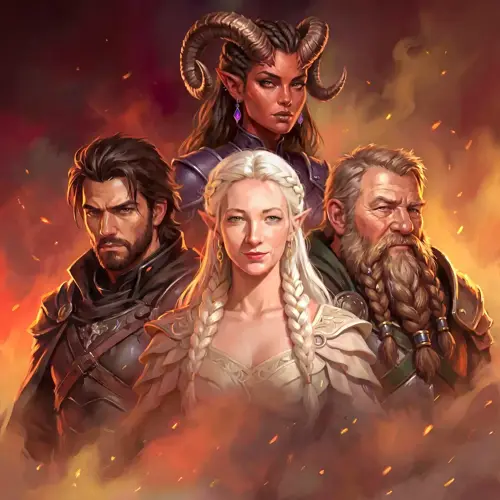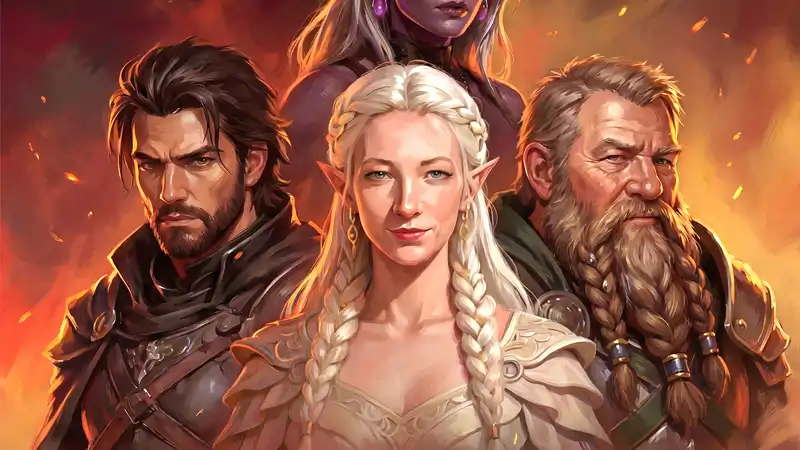
There’s a moment in every long-running DnD campaign where someone in the group says it: “We should get a portrait done.”
Maybe it’s after a big boss fight. Maybe it’s before the final arc. Maybe someone’s moving away and the party realizes this thing they’ve been sharing for months (or years) is going to end eventually, and they want something real to remember it by.
Whatever the reason — when a group commissions a party portrait, we take it seriously. Because we know it’s not just a picture of characters standing next to each other. It’s a picture of a friendship. A shared experience. A whole story compressed into a single image.
We’ve painted a lot of party portraits at this point, and we’ve learned what separates the ones that are “nice” from the ones that make the whole group go silent when they see it for the first time. Here are the seven things that matter most.
1. Every character needs to be instantly recognizable
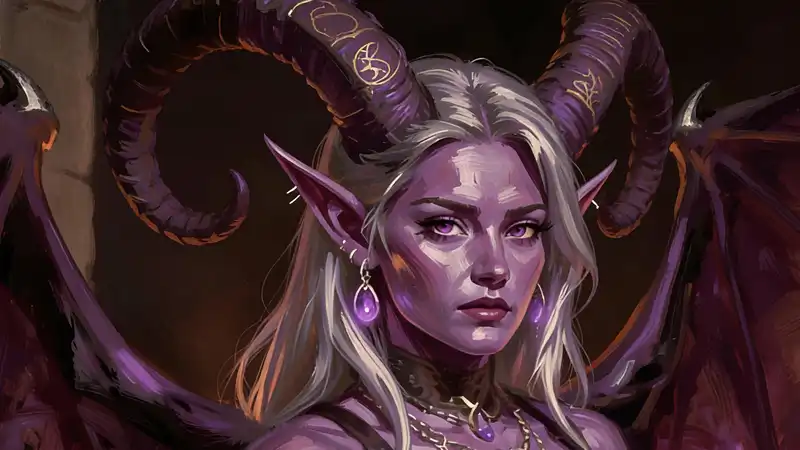
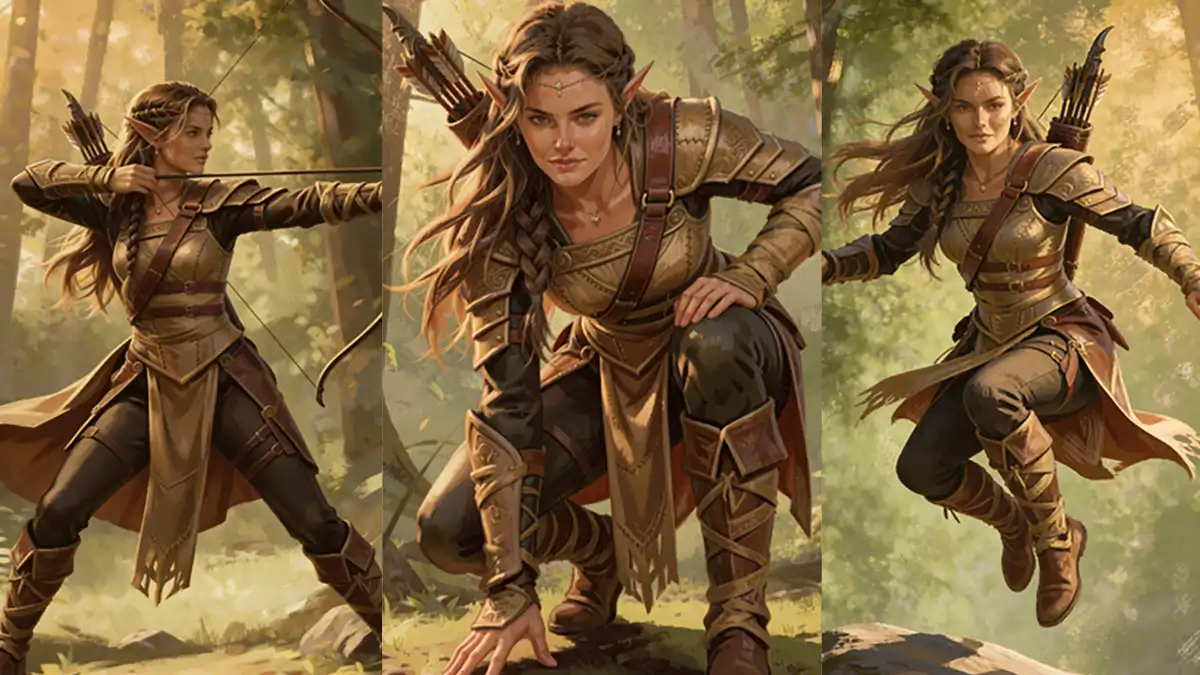
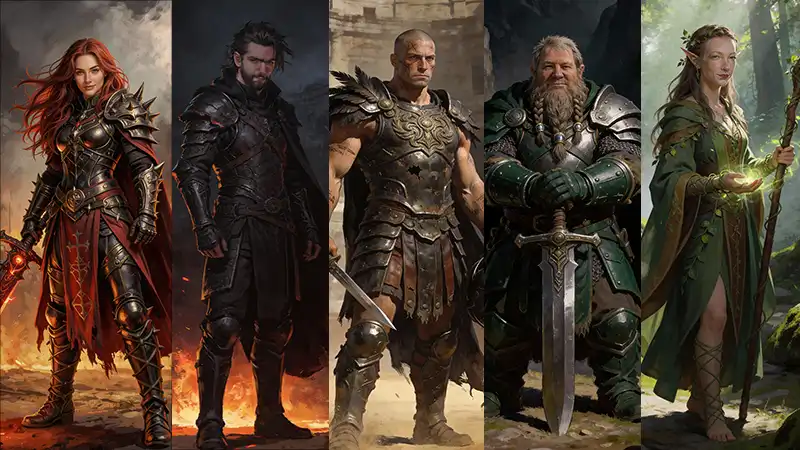
This is the foundation. In a party portrait, every character has to read clearly — even at a glance. If someone looks at the piece and can’t immediately tell which one is the rogue and which one is the ranger, something went wrong.
That means distinct silhouettes, different color palettes, varied body types, and poses that feel specific to each character. The barbarian doesn’t stand the same way as the wizard. The bard doesn’t hold themselves the same way as the paladin. Every character needs their own visual identity, even when they’re sharing the same canvas.
This is one of the first things we work out with a party — who is who, and what makes each of them visually distinct from the others.
2. The composition tells a story
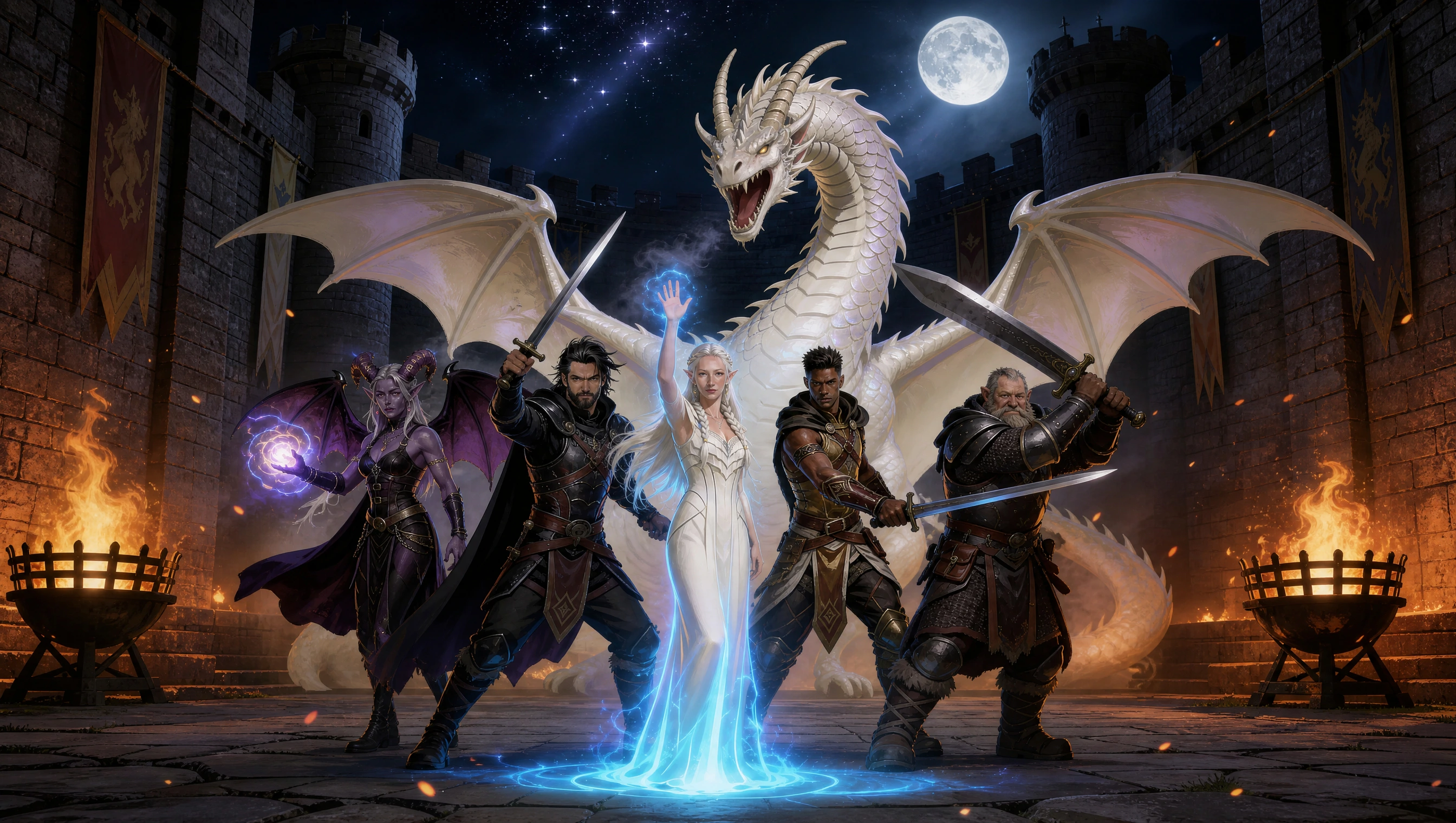
A party portrait isn’t five individual portraits photoshopped next to each other. It’s one image with one composition, and that composition should say something about the group.
Are they standing in formation, ready for battle? Gathered around a campfire after a long day? Walking through a gate into something unknown? Posing like a family photo where everyone is pretending to be serious but one person is clearly about to ruin it?
The best party portraits have a moment. A shared context. Something that makes the viewer feel like they just walked into the middle of a scene. When a client tells us “we want it to feel like we’re about to kick down a dungeon door,” we know exactly what to do with that. That one sentence shapes the entire composition.
3. The characters should interact with each other
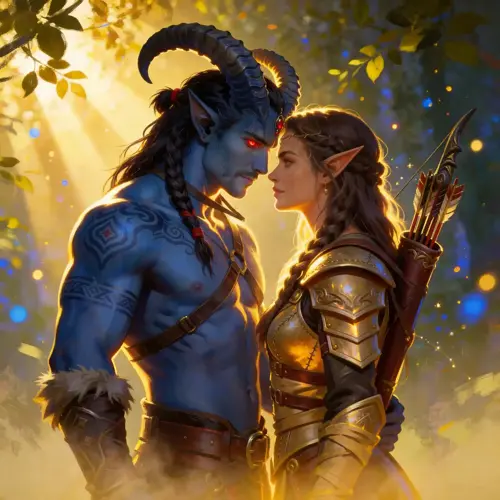
This is what separates a good party portrait from a great one. Characters who exist in the same space but feel like they’re aware of each other. Maybe the cleric’s hand is resting on the fighter’s shoulder. Maybe the rogue is slightly behind the group, watching the rear. Maybe two characters are sharing a look that only makes sense if you know their backstory.
These small interactions are everything. They turn a collection of characters into a party — a group that’s been through things together and trusts each other (or doesn’t, which is also fun to paint).
When we’re planning a party portrait, we always ask about the dynamics. Who’s the leader? Who’s the chaos? Who’s the quiet one? Who would literally die for the person standing next to them? Those answers shape every pose and every glance in the final piece.
4. The lighting has to be cohesive
This is the technical thing most people don’t think about, but it makes or breaks a party portrait. Every character in the image needs to be lit by the same source — the same direction, the same temperature, the same intensity. If the barbarian looks like they’re standing in bright sunlight and the wizard next to them looks like they’re in candlelight, the whole image falls apart.
Cohesive lighting is what makes a party portrait feel like one painting instead of five characters pasted together. It unifies everything — skin tones, armor reflections, the way shadows fall, the mood of the scene. We spend a lot of time getting this right because it’s the invisible thing that makes everything else work.
5. The background supports the group without stealing the show
Party portraits are busy by nature. You’ve got multiple characters, multiple outfits, multiple weapons, multiple color palettes all competing for attention. The background needs to set the scene without adding more visual noise.
That usually means keeping it atmospheric rather than detailed. A foggy forest. A burning city in the distance. The entrance to a dungeon with light spilling out. The inside of a tavern with warm tones and soft shadows. Something that gives context and mood without pulling focus from the characters.
The exception is when the background IS the story — “we’re standing on the battlefield where we defeated the dragon” — and then we build it out more intentionally. But even then, the characters stay front and center.
6. Scale and positioning matter more than you think
In a party portrait, where each character stands — and how big they are relative to each other — communicates something whether you plan it or not.
The character in the center usually reads as the leader (or the emotional heart of the group). Characters in front feel more prominent. Characters slightly behind or to the side feel supportive or protective. A character looking away from the group reads as independent or guarded.
We think about this a lot when planning the layout. It’s not just about fitting everyone in the frame — it’s about making sure each character’s position says something true about who they are in the group. Sometimes the tankiest barbarian belongs in front. Sometimes the quiet cleric belongs in the center because they’re the one holding everything together.
If you have opinions about positioning, tell us. If you don’t, we’ll figure it out based on what you tell us about the party dynamics.
7. The piece should make everyone in the group feel seen
This is the one that matters most, and it’s the hardest to get right.
A party portrait is usually a gift, or a shared investment, or a celebration of something meaningful. Every person in the group is going to look at it and — consciously or not — check whether THEIR character feels right. Does the face match what they imagined? Does the armor look the way they described it? Does their character feel as important as the others, or did they get pushed to a corner?
Our job is to make sure every single character in the piece feels like they got the same love and attention. No one gets treated like a background extra. No one gets less detail because they’re standing at the edge. Every character is someone’s favorite character, and we paint them that way.
This is why the questionnaire stage is so important for party commissions. We don’t just ask for one description — we ask for ALL of them. Every character. Every detail. Every player’s vision. It takes more time, but the result is a piece where everyone looks at it and thinks “that’s MY character” without feeling like someone else’s character got more attention.
Ready to bring your whole party together?
If you’ve been thinking about commissioning a party portrait, here’s our honest advice: do it before the campaign ends. Not after. Not “someday.” Now-ish.
Campaigns end. People move. Schedules change. The window where your whole group is still playing together and still in love with these characters doesn’t stay open forever. A party portrait captures that window and keeps it.
Talk to your group. Split the cost. Pick the moment you want to remember. And then send us everyone’s character description and let us build something you’ll all keep forever.